Why the sequencer is rarely the bottleneck
In most sequencing labs, the instrument time is predictable. NGS library preparation is not. Once you move beyond a few dozen samples, the slow steps are almost always upstream: normalization, enzymatic mixes at low volume, and bead cleanups that need tight timing.
When you are working in 96-well format at 20 to 50 µL, a small pipetting deviation often disappears into the noise. In 384-well plates, the same absolute error becomes a large relative error. The problem is not only volume accuracy. It is also the well-to-well consistency of mixing, incubation timing, and how much liquid is left behind at each step.
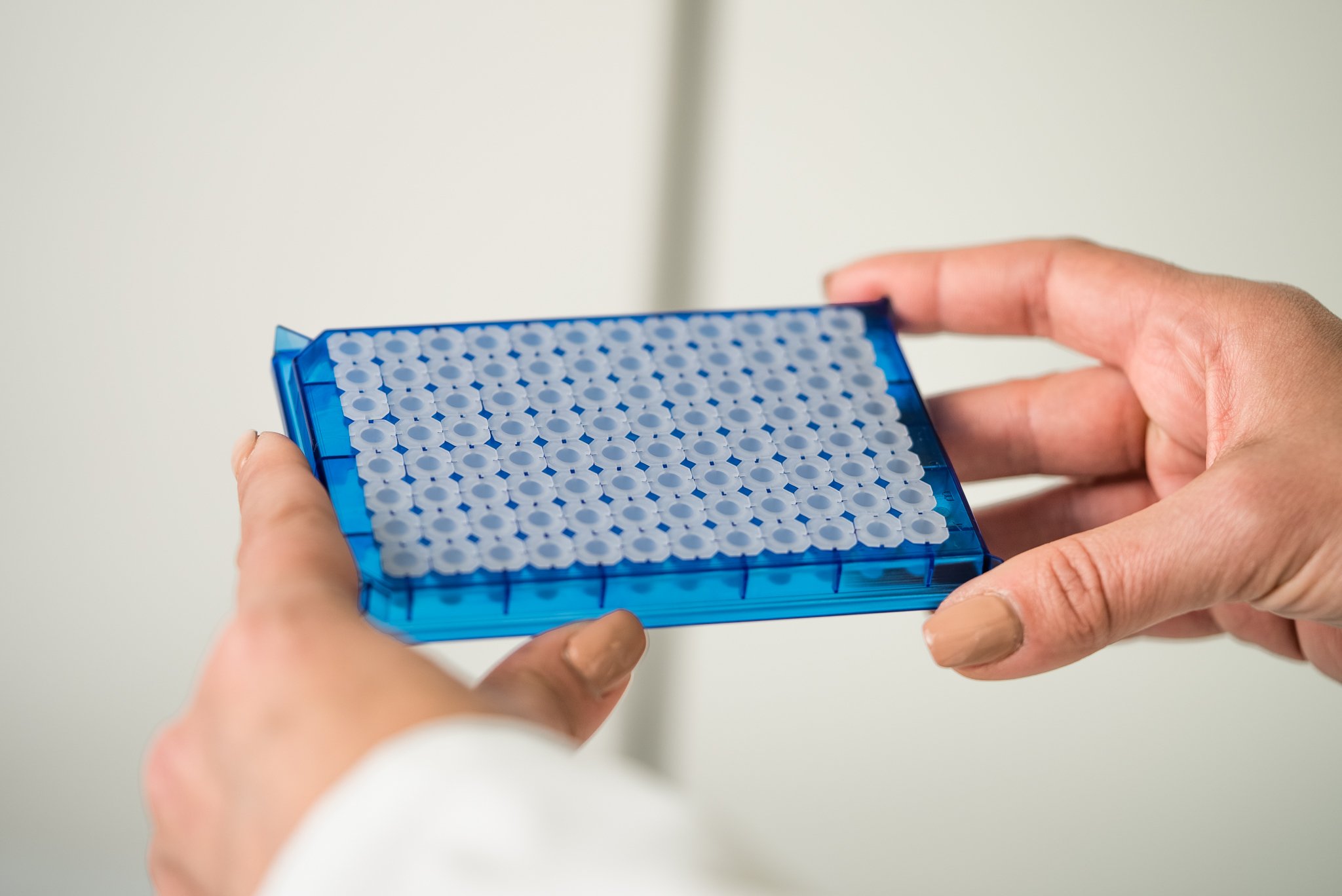 Image 1: A person holding a blue 96-well plate.
How liquid handling variability shows up in data
At the bench, a plate can look fine and still produce uneven sequencing. Common symptoms include library yield spread that forces extra re-normalization, broader fragment-size distributions, and occasional wells that fail QC without an obvious procedural mistake.
For multiplexed runs, even low-level sample cross-contamination can show up as unexpected index reads in negative controls or as minor barcode bleed between adjacent wells. That is painful because you often only notice it after sequencing.
What to demand from automation for library prep
A practical validation plan before you scale
Before you commit a high-value workflow to a new platform, run a short validation that separates liquid handling from chemistry. This ensures that reagents are conserved and that target results are met.
Where tip-free impulse dispensing can fit
Tip-free dispensers, such as the DISPENDIX I.DOT family, transfer nanoliter to low-microliter volumes directly from a source plate into the destination plate. Because there are no disposable tips, you remove tip costs and eliminate tip carryover as a contamination route. Additionally, you avoid priming volumes that come with tubing-based systems.
In practice, labs use this approach for normalization, reagent addition at low volume, and rapid setup of many plate maps. It is not a replacement for every step in library prep, but it can take pressure off the steps that are most sensitive to small volume differences. Being careful during upstream library prep steps will eliminate headaches during downstream sequencing.
Video 1: Highlights the capabilities of the I.DOT in a visual-focused video of the instrument
Key takeaways
- When library prep is the bottleneck, the first gains usually come from improving repeatability at low volumes, not from dispensing faster.
- Validate with a simple test plate and one control library before scaling to full batches.
- If carryover and consumables are driving cost or risk, tip-free dispensing is worth a close look.
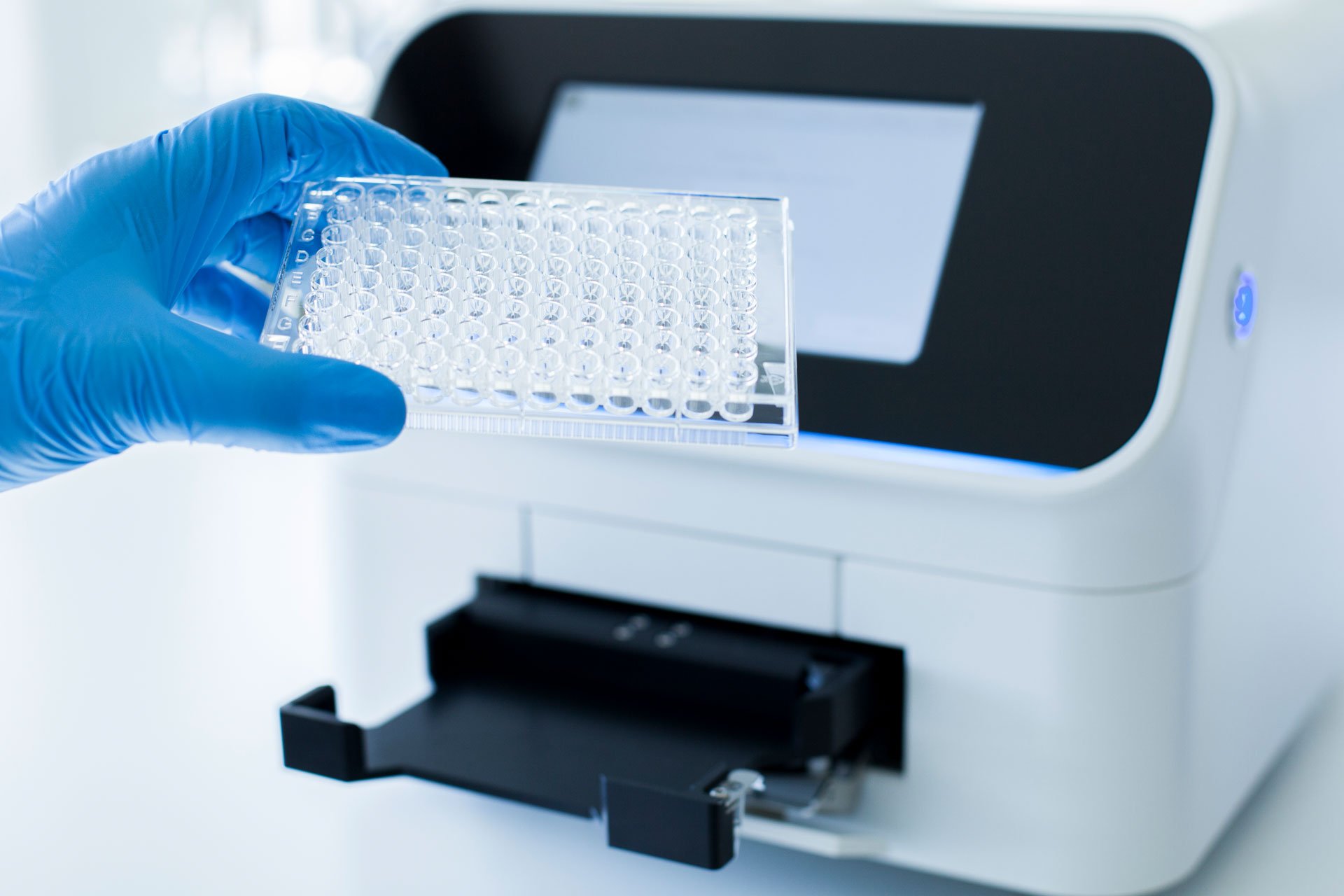 Image 2: A person holding a clear 96-well plate in front of the I.DOT instrument.
