What is a Liquid Handler?
A liquid handler is a fundamental laboratory instrument designed to accurately dispense, transfer, and mix a variety of liquid types in a controlled volume, ranging from microliters to milliliters. Liquid handlers can be manual, semi-automatic, or fully integrated automated systems, often using robotic pipetting technology to streamline repetitive tasks.
Advantages like improved precision, a reduction in human-error, and an increase in high-throughput workflows make liquid handlers at the forefront of modern laboratories, playing a critical role in supporting applications within pharmaceuticals, biotechnology, diagnostics, and drug discovery.

Dispensing
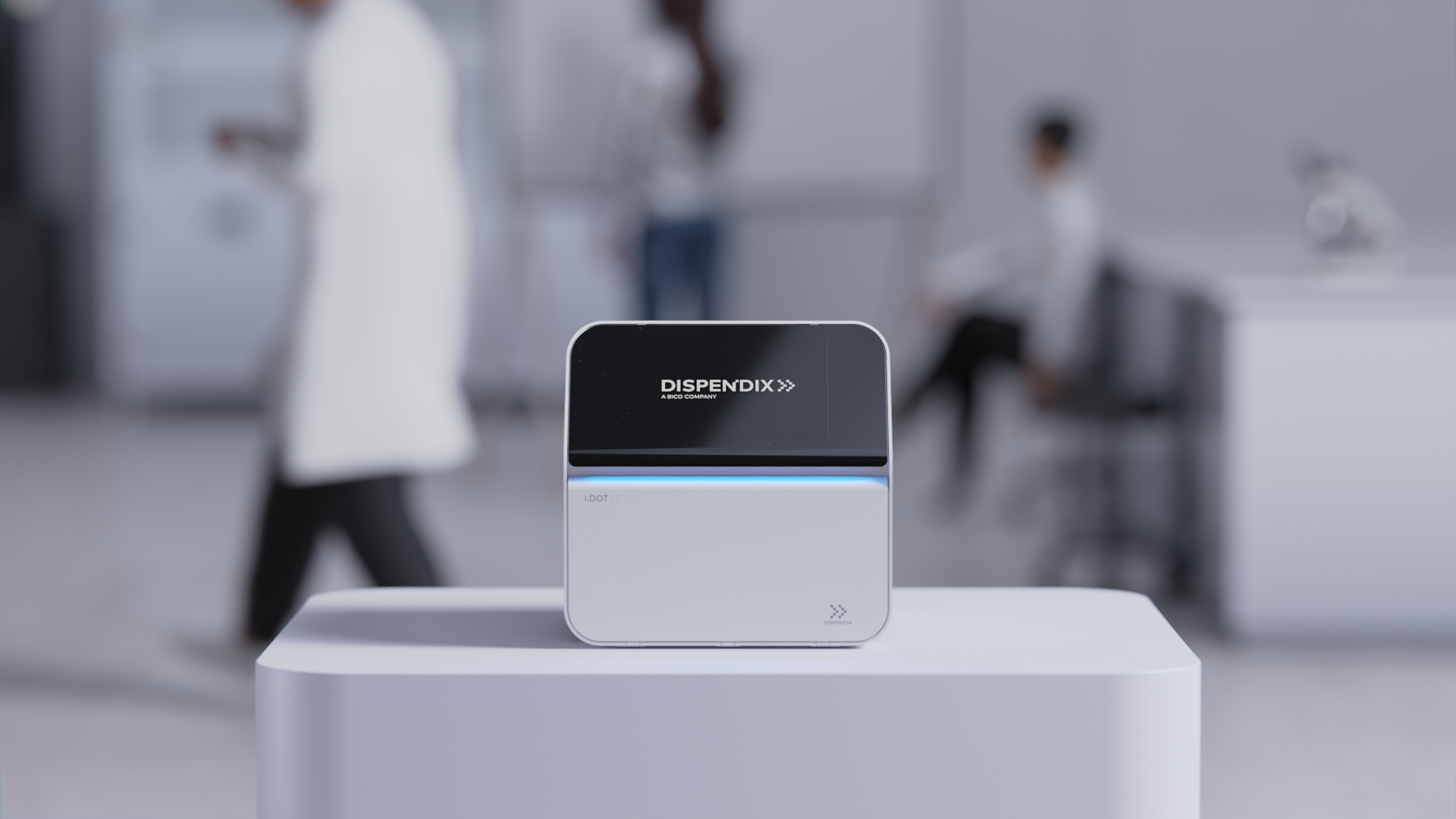
I.DOT: Our Non-Contact Liquid Handler
The I.DOT is the most innovative, non-contact liquid handler designed to streamline scientific workflows with a need for low volume automated reagent dispensing. This technology precisely dispenses volumes as low as 8nL with accuracy, speed, and without the use of traditional plastic pipette tips.
Additionally, with the I.DOT’s customizability and flexibility features, our technology will be installed to match your workflows, not the other way around. With a 0.1nL resolution, we enable our devices to perform reaction miniaturization, conserving reagents, and reducing dead volume.
Why the I.DOT?
Multiple Liquid Handling Classes
Dispenses multiple liquid classes on demand, including aqueous solutions, PCR buffer, DMSO (up to 100%) and glycerol (up to 50%) — and defines liquid class at the well level.
Non-Contact
Droplets are dispensed into the target plate below the source plate which eliminates carryover and cross-contamination.
Speed
Dispenses 10 nanoliters across a 96-well plate in 10 seconds and across a 384-well plate in 20 seconds.
Low Dead Volume
Further optimizes your workflow enabling assay miniaturization.

G.PURE GEN 2: Automated, Reproducible & Tipless DNA Purification
G.PURE GEN 2 is engineered to streamline steps of the NGS library preparation workflow. By combining intuitive software with full PCR microplate compatibility, G.PURE eliminates the bottleneck of manual bead cleanups.
Built from the ground-up to make your NGS library preparation work easier, faster, and higher quality. The user-friendly, intuitive software, combined with being fully compatible with PCR microplates, makes implementing the G.PURE into your lab a breeze.
Plate Washing
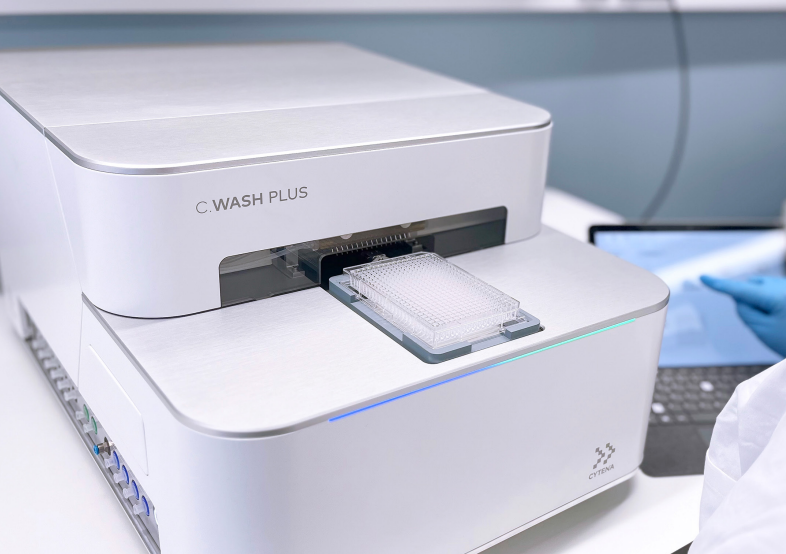
C.WASH PLUS
Sample washing steps consume a major portion of time in high-throughput library preparation applications. The C.WASH PLUS embeds centrifugal plate washing with a tip-free liquid handler, ideal for multi-reagent immune and cell-based assays in 96-, 384- and 1536-well plate formats.
This automated plate washing instrument achieves over 99.99% washing efficiency (after 2 wash cycles) with less than 0.1 µl residual volume in each well. Designed for ease of use, the C.WASH PLUS can be operated with minimal training, enabling rapid onboarding for new users. Additionally, liquid inputs, wash cycles, and target volumes can be flexibly configured, allowing users to tailor protocols to their specific assay requirements.

Transform Your Laboratory with Automated Liquid Handlers
Enhanced Accuracy and Precision
Reduced Human Error
Time and Cost Efficiency
Improved Reproducibility
Liquid handling automation plays a crucial role in modern laboratories by increasing efficiency, improving data quality, and enabling scalable, high throughput workflows.
Frequently Asked Questions
What is a liquid handler?
A liquid handler is an automated laboratory instrument designed to precisely dispense, transfer, and mix liquids in workflows such as sample preparation, assay setup, and reagent distribution.
How does a liquid handling system work?
Liquid handlers use pipetting technologies (air displacement, positive displacement, or non-contact dispensing) combined with robotic movement to transfer liquids between plates, tubes, or reservoirs.
What is the difference between contact and non-contact dispensing?
Contact dispensing touches the liquid surface or container, while non-contact dispensing (like acoustic or droplet-based systems) transfers liquid without physical contact, reducing contamination risk.
Can liquid handlers handle viscous or volatile liquids?
Yes, but performance depends on the dispensing technology. Some systems are specifically designed to handle challenging liquids more effectively. The I.DOT includes a wide range of liquid classes that are optimized to dispense all kinds of reagents.
Do liquid handlers require programming?
Some systems require scripting, while others offer user-friendly software with drag-and-drop interfaces. Our systems (I.DOT series), do not require any user programming and can be integrated into new or existing workflows from day 1.
What is the future of liquid handling automation?
The future lies in miniaturization, increased automation, AI-driven workflows, and integration with fully autonomous labs.