Genomics
3 Innovations in Next-Generation Sequencing Sample Prep
Discover three cutting-edge innovations transforming NGS sample prep—automation, sequencing-ready platforms, and low-volume dispensing.
Next-Generation Sequencing Explained | A practical guide of NGS workflow steps, benefits, and applications in life science.
NGS, or Next-Generation Sequencing, is a group of technologies that have enabled the rapid sequencing of DNA and RNA. Unlike traditional sequencing methods where fragments were analyzed one at a time, NGS provides the solution to sequence millions of genetic fragments simultaneously, allowing researchers to study entire genomes in extreme detail in a fraction of the time and cost.
Because of its speed, scale, cost efficiency, and accuracy, NGS has become the fundamental tool in modern day genomics, biomedical research, personalized medicine, and biotechnology.
In this guide, we’ll explain what Next-Generation Sequencing is, how it works, the different NGS workflow steps, and why it has revolutionized biological research today.
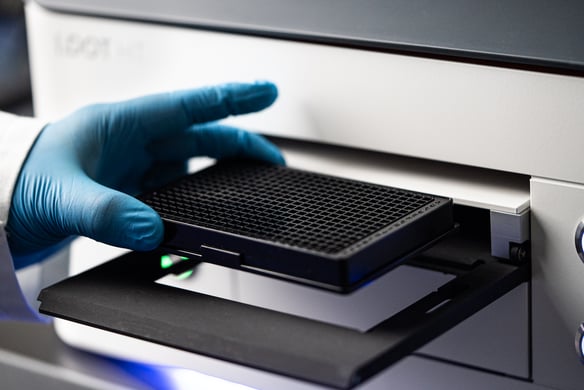
Prior to the invention of NGS, earlier methods such as Sanger Sequencing, which was discovered in the 1970s, enabled scientists to use dideoxynucleotides (ddNTPs) to terminate DNA synthesis, thus creating different length fragments for sequence reading. Although this process does yield high accuracy and long read lengths, it is often labeled only for low-throughout projects as it can be very time-consuming for large-scale experiments.
Today, NGS proves to be the leading technology for discoveries in a wide range of fields because, instead of taking months, it now only takes a couple of hours to sequence entire genomes.
There are several different types of NGS technologies, with certain differences in how they work. However, these NGS technologies follow a similar workflow to enable DNA and RNA sequencing.
Genetic materials like DNA and RNA need to be extracted from a biological sample. Sources may include blood, tissues, cells, or microbial cultures. Isolating target single cells may be a step in your research, which is most efficiently done through automated single-cell dispensing.
Samples need to be converted into “sequence-ready” libraries. There are many short and long-read library prep kits available in the market, but they all generally include steps such as fragmentation, adapter ligation, amplification, and clean ups. Once these fragments have been created and tagged with appropriate primers, they can then be sent for sequencing.
Prepared library samples are loaded into a sequencer where millions of fragments are sequenced in parallel. Occasionally, library samples may need to be normalized and pooled before sequencing to obtain balanced reads.
Sequencers expel raw data on all fragment reads it detects. Bioinformatic tools are utilized to align sequences to reference genomes, identify genetic variants and mutations, quantify gene expression on target sections, and define structural.
Life science and biotechnology as we see it today would not be as robust without the invention of NGS. Next-Generation Sequencing has opened the doors for large-scale, and high-throughput genomic analysis quickly and cost-effectively.
High Throughput - Millions of genetic fragments can be sequenced at once
Over time, researchers have developed solutions to reduce the time it takes to sequence library samples as well as the cost of its performance. However, in today’s world, laboratories of all sizes are still faced with slow, manual library preparation which can hinder downstream analysis. Performing processes like extraction, fragmentation and ligation, amplification, and clean ups with extreme precision is crucial to collect comprehensive sequencing data.
NGS automation is a great way to improve precision while removing the limitations of manual library prep. Automated NGS is done through various levels, from reagent preparation, bead clean-up, to fully automated workflows.
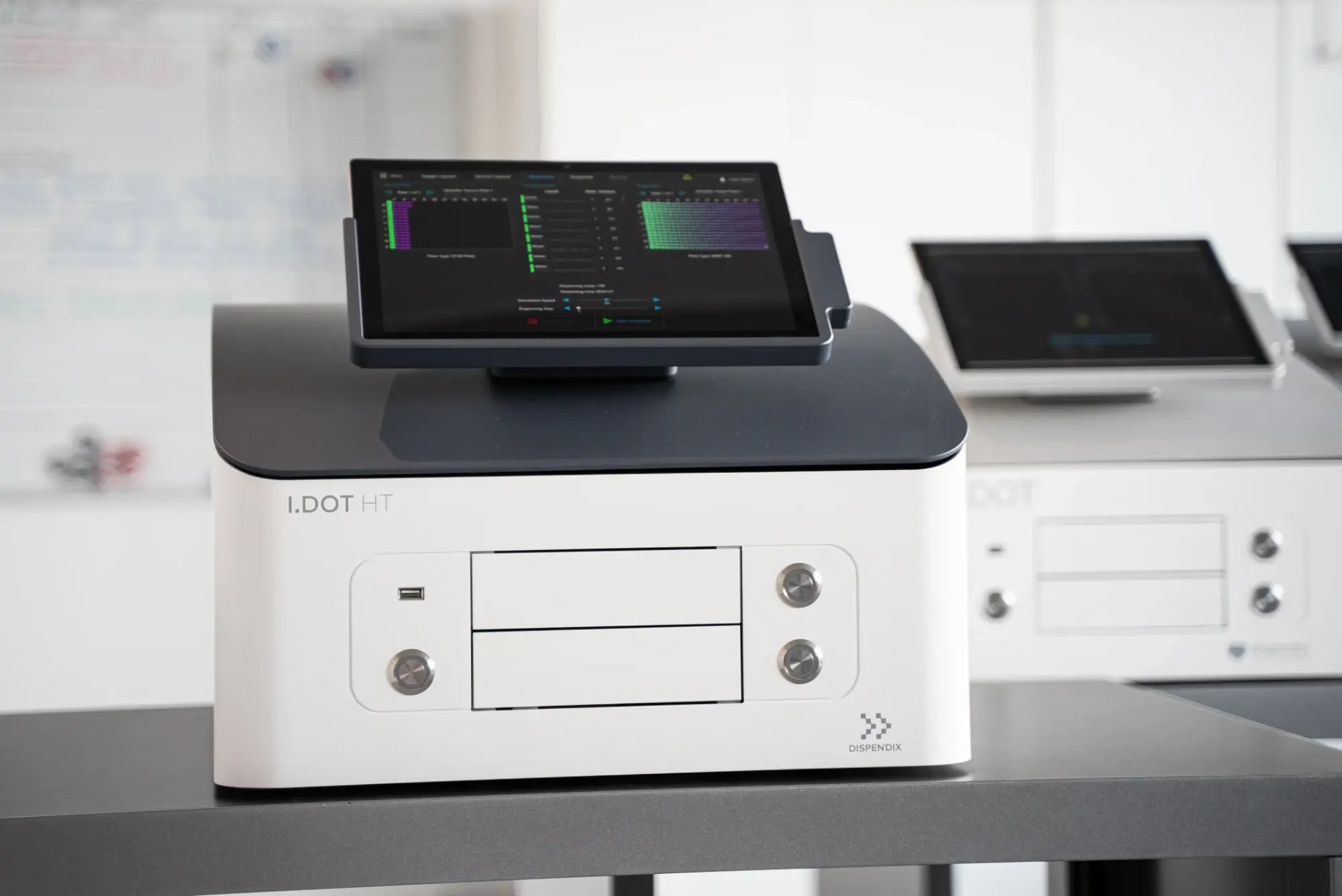
Regardless of the library prep kit you choose, there will be a selection of reagents that are needed to carry out short or long-read library preparation. The I.DOT is a non-contact liquid handler that precisely dispenses low volume liquids into 96- or 384-well plates, designed with sustainable materials, no risk in cross-contamination, and developed with miniaturization in mind.
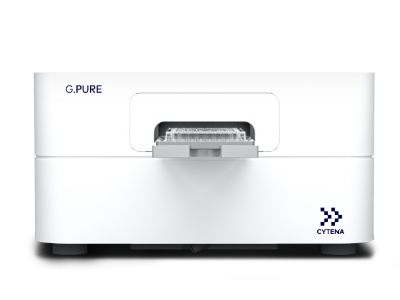
Remove the uncertainty in one of the most tedious steps in the NGS Library Preparation process by automated bead-based clean ups for your samples. The G.PURE utilizes an integrated dispenser and novel centrifugal evacuation technology, which enables fast, reproducible, and tip-free bead washes and resuspension.
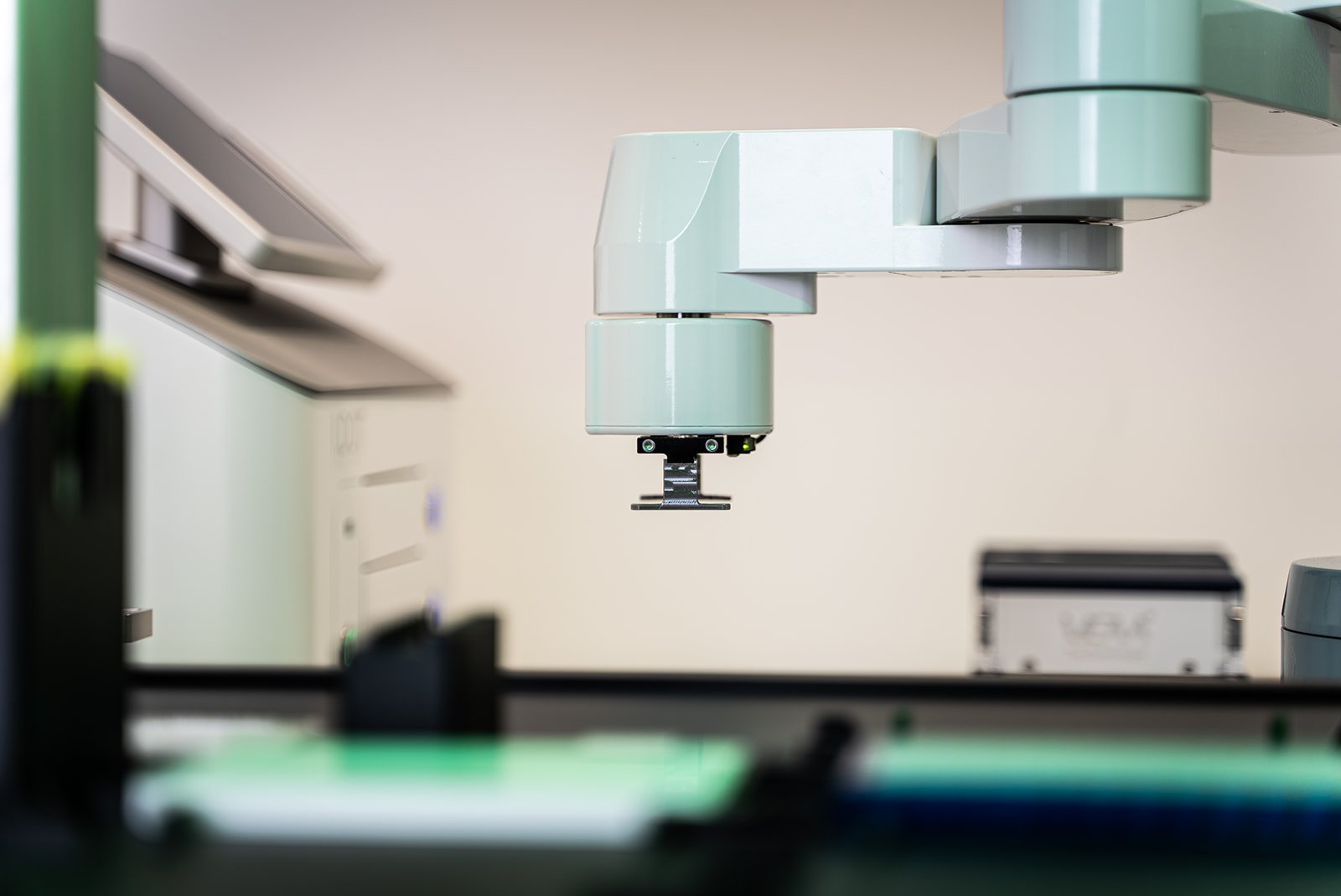
Imagine the complete solution to automating all steps in the NGS Library Preparation process, that is the upcoming DISPENDIX product, the G.STATION. The G.STATION is a sum of all its parts including the integration of the I.DOT and G.PURE.
Next-Generation Sequencing is a transformative technology that enables scientists to rapidly analyze DNA and RNA at a massive scale. By sequencing millions of fragments simultaneously, NGS allows researchers to explore genomes, understand gene expression, and uncover biological insights that were previously impossible.
Today, NGS powers discoveries in genomics, cancer research, infectious disease, and personalized medicine, making it one of the most important technologies in modern life science.
Discover three cutting-edge innovations transforming NGS sample prep—automation, sequencing-ready platforms, and low-volume dispensing.
Master the five best practices for NGS library prep—from adapter ligation to automation—and improve sequencing quality and reproducibility.
The G.STATION is the latest NGS Automation technology solution that fully optimizes NGS (next-generation sequencing) library prep.