Genomics
5 Best Practices for NGS Library Prep Success
Master the five best practices for NGS library prep—from adapter ligation to automation—and improve sequencing quality and reproducibility.
Deep dive into the next-generation sequencing process and understand how upstream library preparation impacts the accuracy of your library reads.
Next-generation sequencing (NGS) is a powerful technology that enables scientists to rapidly sequence DNA and RNA at an unprecedented scale. Unlike traditional methods such as Sanger sequencing, which analyze one fragment at a time, NGS can process millions to billions of sequences simultaneously, thus dramatically increasing speed, throughput, and efficiency.
New to NGS? Start with our “What is NGS?” blog for a quick foundation.

Understanding how NGS works starts with breaking down the full NGS workflow into its essential stages:
The first step in the NGS process is library preparation, where DNA or RNA is extracted, fragmented, and tagged with adapter sequences. These adapters enable fragments to bind to the sequencing platform and undergo amplification, directly impacting workflow efficiency and data quality.
To generate detectable signals, DNA fragments are amplified using methods like bridge amplification or emulsion PCR. This creates clusters of identical fragments, ensuring accurate detection during sequencing.
Sequencing is the core of the NGS process. Through massively parallel sequencing, millions of DNA fragments are read simultaneously. Most platforms use sequencing-by-synthesis, where nucleotides are added one at a time and recorded to determine the DNA sequence.
NGS produces large volumes of data that are processed using bioinformatics tools. Sequences are aligned or assembled, allowing researchers to identify mutations and gene expression patterns. This step converts raw data into meaningful biological insights.
Next-generation sequencing has become one of the fundamental technologies across a multitude of life science disciplinaries, enabling an extensive range of research applications and workflows. Let’s break down the leading assays in which NGS plays a critical role.
NGS is widely used for whole genome sequencing (WGS) and targeted DNA sequencing, allowing researchers to identify genetic variations, study inherited traits, and better understand complex biological systems.
Through RNA sequencing (RNA-seq), NGS enables comprehensive analysis of gene expression, helping scientists uncover how genes are regulated under different conditions and in different cell types.
Cancer genomics research has been streamlined with collection of next-generation sequencing data. This data can provide more insight in identifying mutations, tracking tumor evolution, and supporting precision oncology initiatives tailored to specific patients.
NGS-based methods are used to study DNA methylation and chromatin structure, providing information into how gene activity is regulated beyond the genetic code itself.
Advanced NGS workflows enable single-cell sequencing, allowing researchers to explore cellular heterogeneity and better understand complex tissues and biological systems at unprecedented resolution.
NGS accelerates biomarker discovery, target identification, and validation. This helps streamline the development of new therapeutics and personalized treatment strategies.
Over time, next-generation sequencing has become more accessible and cost-effective, revolutionizing how scientists conduct research. As sequencing speed, accuracy, and throughput have improved, NGS has enabled increasingly complex and large-scale genomic workflows.
However, this rise in high-throughput sequencing has introduced new challenges, specifically in upstream sample processing. NGS library preparation remains a critical bottleneck, often involving manual, time-consuming, and costly steps that can limit overall efficiency and reproducibility.
The solution? Automated NGS library preparation. This solution is a smarter, more scalable approach that streamlines workflows, reduces hands-on time, and improves consistency across experiments.
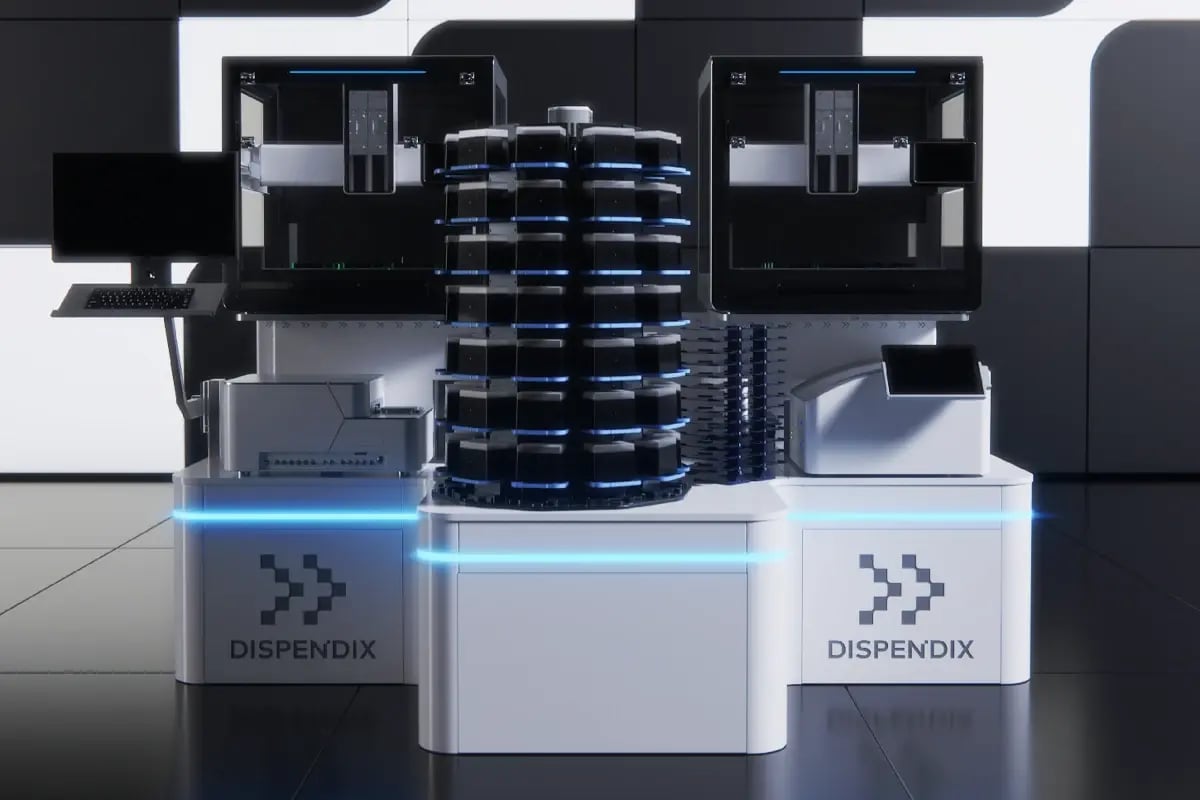
The G.STATION, our all-in-one NGS workstation, is a fully automated system that performs all NGS library preparation processes at the push of a button. Launching this summer, we are excited to present an integrated solution that delivers exceptional performance, sustainable operation, and rapid implementation for all scientists, without the need for extensive training. All NGS workflows can begin on day 1 of instrument use. Like modern sequencing, library prep should also be conducted simplistically and without the hassle of inconsistent manual benchwork. Experience the G.STATION workcell and be ready to witness high-throughput NGS library prep like never before!
Master the five best practices for NGS library prep—from adapter ligation to automation—and improve sequencing quality and reproducibility.
The G.STATION is the latest NGS Automation technology solution that fully optimizes NGS (next-generation sequencing) library prep.
Discover how NGS library prep automation transforms genomics with advanced liquid handling and DNA clean-up technologies.